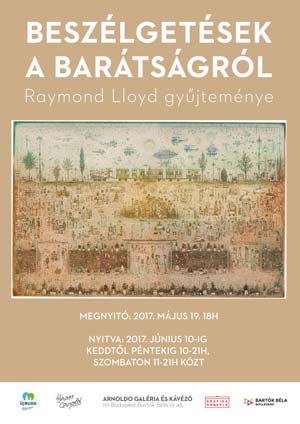
The exhibition presents seven etchings from the collection of Raymond Lloyd, the London-based world traveler and campaigner for gender equality, who passed away this year. Raymond met Gross Arnold on a trip to Budapest in the 1960s, and in memory of their friendship he enriched his collection with numerous etchings. The pictures can now be seen in Budapest once again, at the Gross Arnold Gallery. The opening will be attended by Barbara Rogers, Raymond’s friend, who made the exhibition possible.
Opening: May 19, 2017, at 6 p.m.
The exhibition is on view until June 10.
The exhibition is part of the ELEVEN TAVASZ (Living Spring) and MONTH OF GRAPHIC ARTS program series on Bartók Béla Boulevard.
Event:https://www.facebook.com/events/1345174205563732
Raymond Lloyd (1934-2017)
Writer, activist for inclusive democracy and the equal representation of women, honorary secretary of the Parity Democracy Council
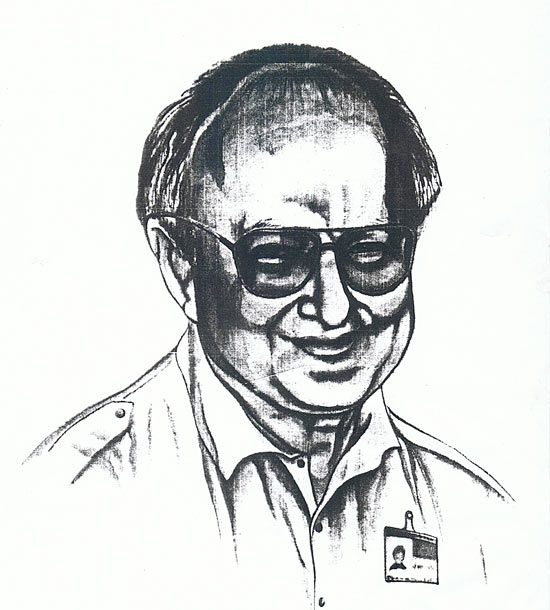
The Parity Democracy Council was founded by Raymond Lloyd in Rome on March 8, 1980, International Women’s Day, originally under the name Women and Men. Lloyd was the editor of the monthly newsletter published from early 1997 under the title Parity Democrat (ISSN 1367-6946), which can also be read at shequality.org up to its 168th issue of December 2010. Beyond the newsletter, there is also a collection of some 850 texts summing up the results of nearly thirty years of volunteer research — a substantial database for anyone interested in the situation of women or in the work of women active in public life.
Raymond Lloyd took his degree in Philosophy, Politics and Economics at Exeter College, Oxford, in 1956. Between 1956 and 1958 he worked for the League of Red Cross Societies in Vienna and Geneva. From 1958 to 1961, as a staff member of the UN High Commissioner for Refugees (UNHCR), he helped resettle some 200,000 Hungarians fleeing Soviet oppression, and from 1961 to 1980 he worked for the UN Food and Agriculture Organization (FAO) in Rome.
Through his work in Algeria in the period following the colonial war, he saw at first hand that although women could play an extremely important role in advancing peace, their voices cannot be heard as long as legal, social, economic and, above all, political obstacles stand in the way of equality between the sexes.
On his visits to 230 states and regions he campaigned for inclusive democracy and stood up for the improvement of women’s situation. He was a life member of the National Trust for Scotland, which works to protect Scotland’s cultural and natural heritage, of the National Geographic Society, of Hostelling International and the Society for International Development, of Anti-Slavery International, which fights against slavery, and of the International Alliance of Women.