Introduction
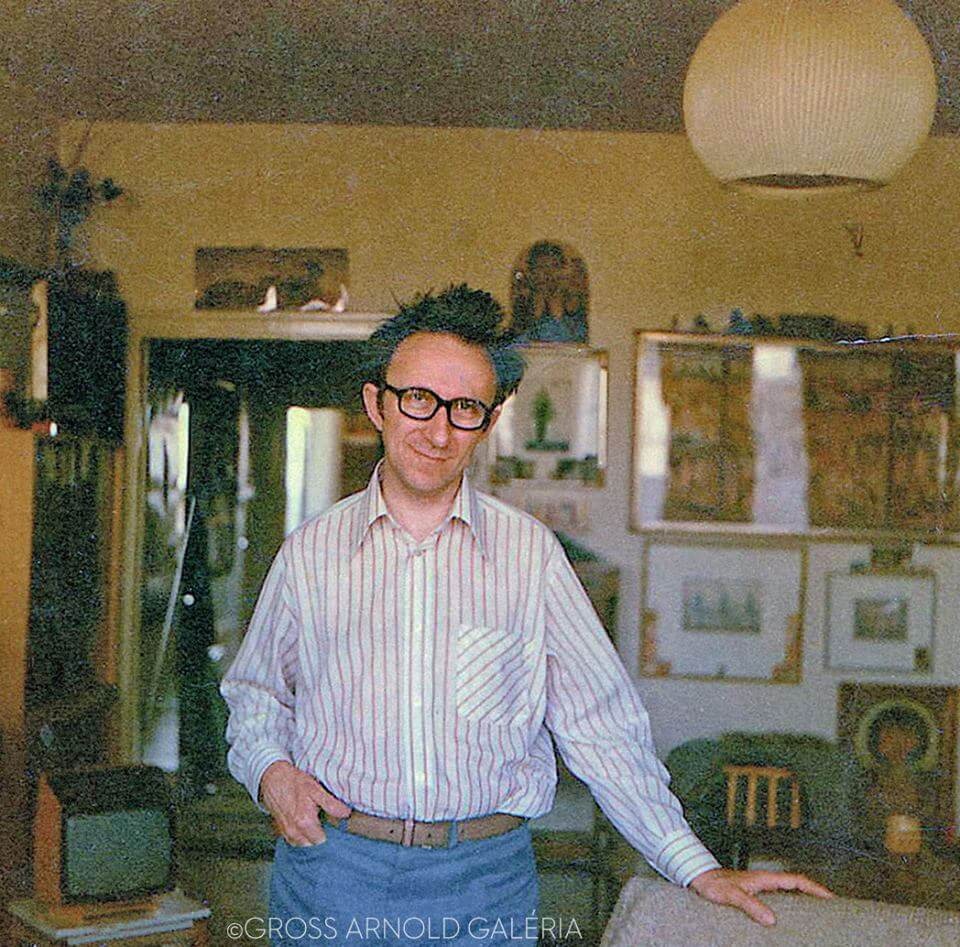
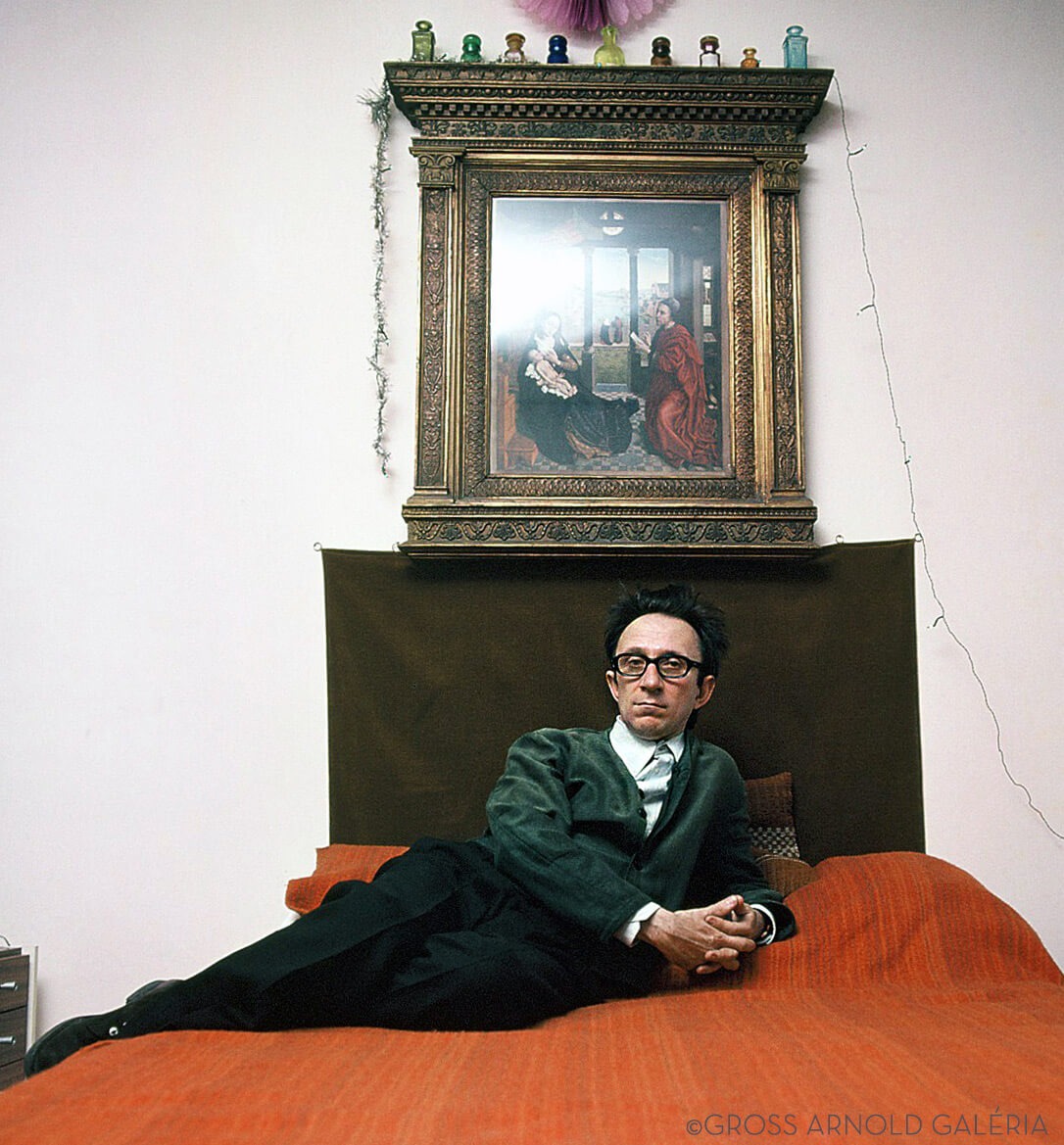
Arnold Gross transformed the art of etching into a world of imagination and wonder.
Born on 25 November 1929 in Torda, Romania, Gross moved with his family to Oradea in 1940. Four years later, he fled to Hungary, where he continued his studies, first at the College of Applied Arts and later at the Academy of Fine Arts. Among his distinguished teachers were Jenő Barcsay, Gyula Hincz, György Kádár, György Konecsni and Károly Koffán, while the artistic legacy of Hieronymus Bosch, Jan van Eyck, Béla Kondor and Vladimir Szabó also left a profound mark on his vision.
From an early stage, Gross developed the distinctive visual language for which he became renowned, refining and enriching it throughout his career. From the 1950s onwards, he held numerous solo exhibitions in Hungary and regularly exhibited internationally, with works shown in Rome, Vienna, Hamburg, London, Tokyo and Los Angeles. In 1966 and 1968, he received First Prize at the International Graphic Biennial in Kraków. His many honours include the Mihály Munkácsy Prize (1955, 1967), the title of Meritorious Artist (1987), the Kossuth Prize (1995), and the Pro Urbe Budapest Award (2008). In late 2014, he was among the first artists to be named Artist of the Nation. He passed away on 22 January 2015, Hungary’s Day of Culture.
His singular world of fantasy—delicate, lace-like compositions animated by countless tiny figures—has earned international acclaim. Generations have admired the extraordinary precision of his work, through which he revitalised the tradition of etching and enriched it with a uniquely expressive colouring technique.
EARLY YEARS
A Miracle Within Reach
Arnold Gross, one of the most distinctive voices in modern Hungarian graphic art, was born on November 25, 1929, in Torda, Transylvania. The intimate world of his childhood-his family home, its garden, and the lyrical landscape that surrounded it-formed the poetic foundation of his later artistic universe.
His father, Károly Tordai Gross, an accomplished painter of landscapes and sacred imagery, nurtured an environment where artistic sensibility was not merely encouraged, but lived. Together with his mother, Ilona Kovrig, of Armenian-Székely heritage, he created a refined and supportive milieu in which imagination could flourish freely. The glazed veranda that served as his father's studio, and the idyllic garden beyond, would later reappear-transformed yet recognizable-throughout Gross's intricate, dreamlike compositions.
From an early age, his artistic path unfolded as a natural continuation of this family legacy. Under his father's guidance, he absorbed the discipline and poetry of plein air painting while sketching and painting watercolors in the dramatic setting of the Tordai Gorge.
This early harmony was interrupted by the upheavals of history. In 1940, the family relocated to Oradea, where a more vibrant cultural environment offered new artistic stimuli. Yet the years of war left an indelible imprint on the young artist. Even seemingly innocent gestures could carry consequences-at one point, he and his brother were briefly imprisoned due to a drawing deemed politically suspect.
In the aftermath of shifting borders and political uncertainty, Gross made a defining, courageous decision. In August 1947, at the age of seventeen, without formal qualifications, documents, or financial means, he crossed the border into Hungary on foot. Though briefly detained, he was ultimately released, and with remarkable determination, he made his way to Budapest.
There, his exceptional talent spoke for itself. Presenting a landscape drawing of striking sensitivity and technical precision, he gained immediate admission-despite all formal obstacles-to the College of Applied Arts as an extraordinary student. It marked the beginning of a remarkable artistic journey.
Student Years
Discipline and Discovery
The early years in Budapest were marked by material hardship and uncertainty; yet the institutional and artistic environment proved decisive in shaping his development. Under the mentorship of György Kádár and Gyula Hincz, Gross began to refine his visual language.
A pivotal moment came in 1949, when the graphic arts department was transferred to the Academy of Fine Arts. Here, under the guidance of Károly Koffán, he immersed himself in the demanding, meticulous techniques of etching and printmaking-skills that would later define his oeuvre.
Beyond formal instruction, his artistic sensibility was profoundly shaped by personal influences. Vladimir Szabó, whom he regarded as an "adopted master," opened pathways toward a richly detailed, imaginative visual world rooted in classical traditions yet liberated from ideological constraints. His close friendship with Béla Kondor further deepened his intellectual and artistic horizons; together, they studied original Rembrandt etchings, absorbing their technical mastery and expressive depth.
During these formative years, Gross's style underwent a decisive transformation. Moving beyond expressive landscape studies, he began to develop a finely articulated, narrative-driven visual language-at once satirical, poetic, and imbued with a subtle, fairy-tale sensibility.
His 1953 diploma work already reflected this mature vision: alongside a masterfully rendered landscape, he presented a series of literary illustrations of exceptional precision and imaginative scope. His graduation was met with critical acclaim, recognizing the rare synthesis of disciplined craftsmanship and lyrical invention that would become his hallmark.
His 1953 diploma work already reflected this mature vision: alongside a masterfully rendered landscape, he presented a series of literary illustrations of exceptional precision and imaginative scope. His graduation was met with critical acclaim, recognizing the rare synthesis of disciplined craftsmanship and lyrical invention that would become his hallmark.
Early Landscapes
The Poetics of Nature
In the years following his graduation, Gross established his reputation primarily through etched landscapes. These works, often commissioned, secured his livelihood while allowing him to refine his artistic language.
His early compositions reveal a sophisticated synthesis of descriptive realism and romantic sensibility, drawing on the legacy of 17th-century Dutch masters-most notably Rembrandt-as well as the Hungarian landscape tradition.
The hills surrounding Budapest-Budakalász, Pomáz, and Szentendre-became recurring motifs. His 1954 etching Budakalász Hills exemplifies this period: precise, architectonic linework combined with an elevated, contemplative perspective.
Yet even at this stage, Gross's landscapes were never mere representations. Through subtle reinterpretation, he infused them with a distinctly lyrical, almost metaphysical atmosphere-transforming observed reality into a poetic construct.
His works inspired by Lake Balaton mark a particularly significant chapter. From elevated viewpoints, vast panoramas unfold-Szigliget Castle Hill, the Keszthely Bay, the iconic silhouette of Badacsony-rendered with both grandeur and intimacy. Often, a solitary figure appears, quietly observing or sketching the landscape: a discreet alter ego of the artist himself.
His technical virtuosity became legendary. According to contemporaries, Gross frequently engraved directly onto the prepared copper plate, without preliminary sketches, working immersed in nature. This remarkable confidence and precision earned him early professional recognition, including the Munkácsy Prize in 1955.
Yet beneath the surface of these seemingly classical landscapes, subtle shifts were already taking place. Tiny, almost imperceptible fantastical elements-angels, devils, playful distortions-began to infiltrate the compositions. These delicate disruptions signaled the imminent transformation of his art: the gradual departure from topographical fidelity towards an autonomous, imaginative universe.
Renewal
The Birth of a Private Mythology
By the early 1960s, Gross's art underwent a profound transformation. The external landscape gave way to an inner, imaginative realm-a world governed not by observation, but by poetic invention.
The year 1963 marked a decisive turning point with the creation of The Non-Withering Garden. In this visionary composition, natural forms dissolve into a dreamlike Eden populated by anthropomorphic flowers, ethereal figures, and symbolic self-representations of the artist.
This new universe was both deeply personal and universally resonant-a space of harmony, playfulness, and quiet transcendence.
In parallel to this development, the studio itself emerged as a central motif. In his still-life compositions, objects became carriers of meaning: sunflowers evoking Van Gogh's vitality, literary references preserving the innocence of childhood imagination. The layered imagery-drawings within drawings, fragments, inscriptions-reveals an artist consciously distancing himself from academic conventions, seeking instead the authenticity of instinct and memory.
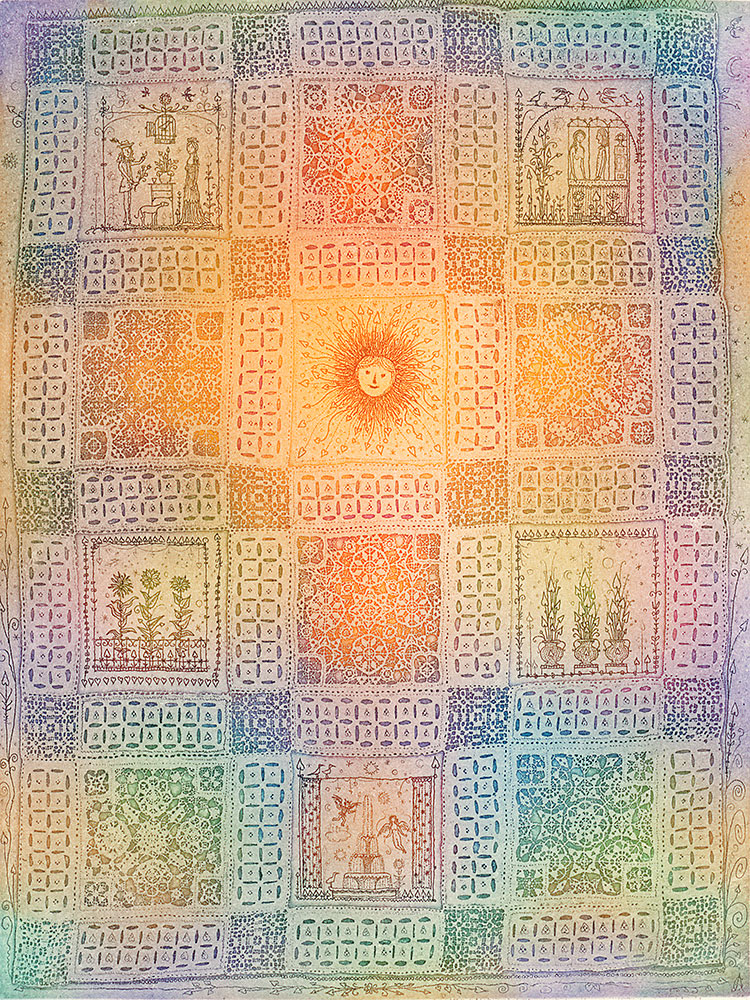
During this period, Gross also revolutionized his technique. Abandoning traditional hand-coloring, he began applying pigments directly onto the printing plate, creating unique, painterly impressions. Each print became an unrepeatable work-blurring the boundaries between graphic art and painting.
His 1964 solo exhibition marked the culmination of this intensely creative phase, presenting a fully realised, unmistakable artistic identity.
Microsurrealism
A World Without Limits
From the mid-1960s onwards, Gross's work achieved international recognition. Exhibitions across Europe, Asia, and the United States established him as a central figure in contemporary graphic art, further reinforced by his awards at the Kraków Biennial.
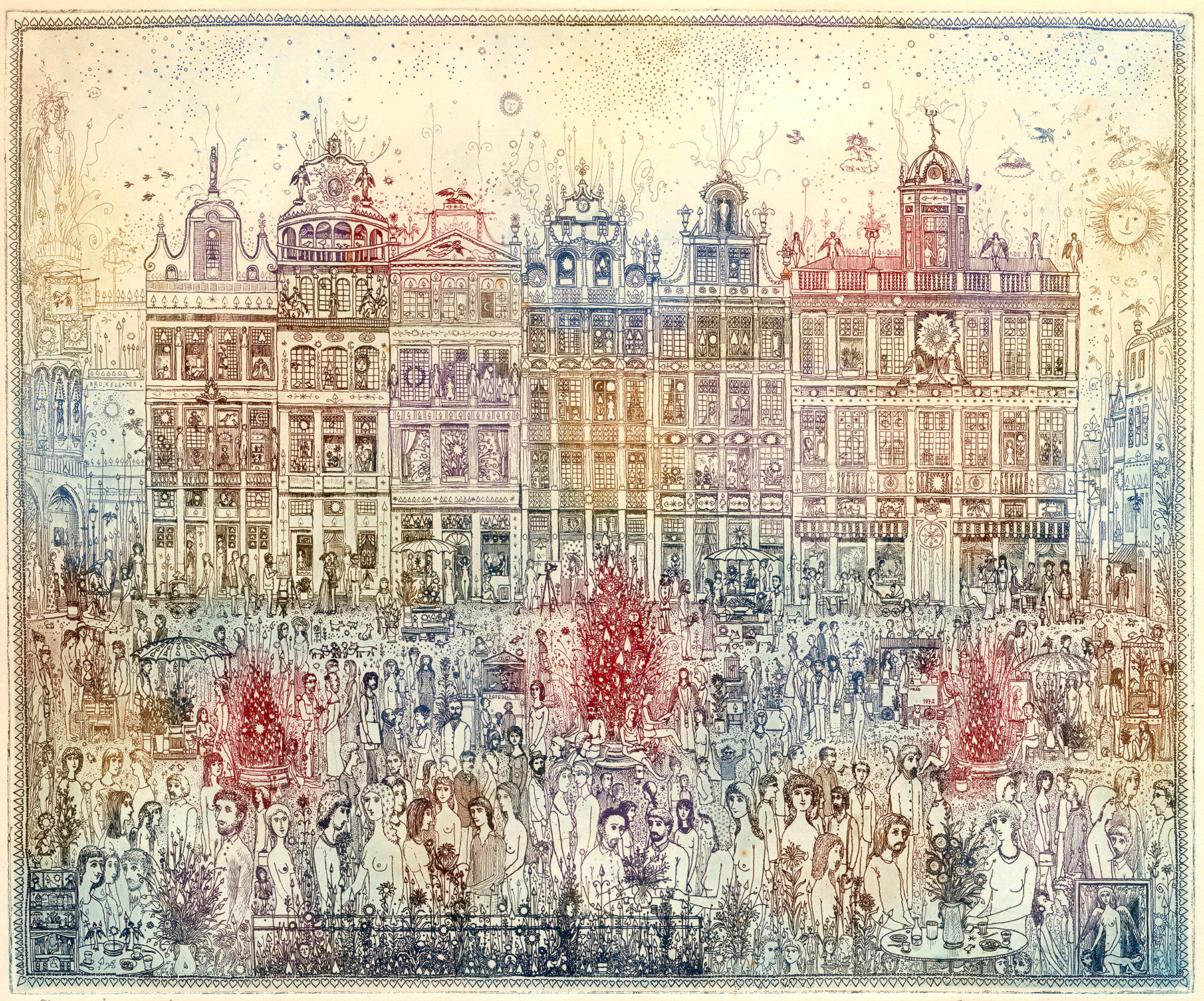
His travels-particularly in Italy-expanded his visual vocabulary. The intimate gardens of earlier works evolved into expansive, theatrical cityscapes, infused with the spirit of Renaissance grandeur and cinematic imagination.
By this time, his signature style-often described as microsurrealism-had fully matured. His compositions became intricate, jewel-like structures, where architecture, nature, and fantasy coexist in perfect equilibrium. Cities such as Budapest or Florence appear as luminous stage sets, inhabited by whimsical figures-tightrope walkers, hybrid creatures, celestial beings-defying gravity and logic alike.
Technological motifs-airships, locomotives, mechanical devices-entered this universe, seamlessly integrated into its poetic order. Inspired by his passion for miniature railways, these elements reinforced a central theme: play as a form of freedom, imagination as refuge.
Gross extended this immersive vision beyond the picture plane. His exhibitions became environments-complete with installations, objects, and moving elements-transforming the gallery into a living embodiment of his artistic world.
Gross extended this immersive vision beyond the picture plane. His exhibitions became environments-complete with installations, objects, and moving elements-transforming the gallery into a living embodiment of his artistic world.
Dioramas
The Expansion of Space
Throughout his career, Gross sought to transcend the limitations of two-dimensional representation. His experimental approach to printmaking-altering plates, reworking compositions, producing variations-demonstrates a radical rethinking of the medium.
His large-scale oil paintings, particularly those created for public interiors, represent a synthesis of his artistic language. In works such as Meetings on the Highway of Friendships, he combined painting, engraving, and sculptural elements into complex, immersive compositions.
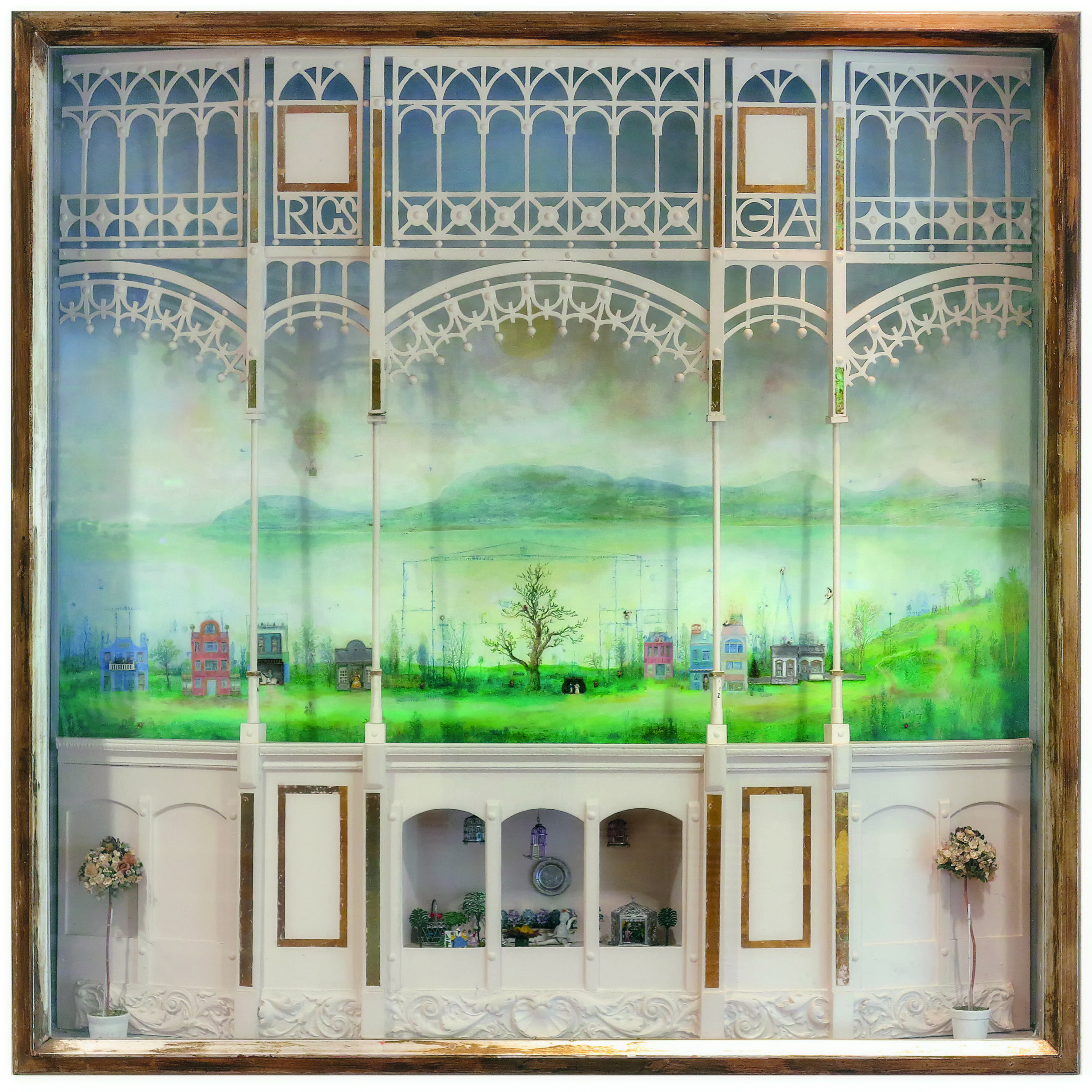
Most striking, however, are his three-dimensional constructions-dioramas and box installations-in which figures, objects, and landscapes extend into real space. These works blur the boundary between image and environment, inviting the viewer into a tangible, imaginative realm.
EARLY AGES
Miracle, within reach.
He was not yet ten years old, but he already knew he wanted to be an artist, just like his father, Károly Gross. Works of art - paintings of panels and saints, portraits, landscapes and still lifes - brushes, paint tubes and jars were as natural a part of their family home in Torda as the ever-moving swing, the kaleidoscopes in the grass, the tamed rocking horse or the lead soldiers lined up in battle formation. Made-to-order crosses of Christ dried in the chamomile-scented air in the courtyard of a veranda house run with wild grapes.
It is from the fragments of this wonder-filled realm that the universe that became Gross Arnold's trademark was later born. With his father and brother, he made daily creative excursions to the Tordai Gorge and along the Golden Valley to discover the secrets of nature. While their father painted, she sat on the grass and tried to capture the details of the landscape with pencil and watercolour. The woods, the banks of the stream, the meadows became a familiar and familiar environment, and this closeness to nature was to form the basis of his later work.
When he was 11 years old, his childhood idyll came to an end: as Torda was no longer annexed to Hungary after the Second Vienna War, the family moved to Oradea in 1940. In the centre of the city, in the famous Bazaar building, Károly Gross rented a three-room apartment that could also be used as a studio. Here they survived the Second World War. By this time, Arnold was almost exclusively occupied with drawing, and his school studies were so uninteresting that it was only thanks to the kindness of his teachers that he did not have to repeat a class. "The child is determined to be an artist," says his father in his diary.
Lexicon
The Fulfilment of a Vision
The political and social transformations of the late 20th century brought both personal and artistic challenges, yet even in periods of withdrawal, Gross's creative vision remained intact.
His late work, Lexicon (2001), stands as a profound synthesis of his life's influences-a symbolic interior where culture and nature, memory and imagination coexist in harmonious tension.
By the turn of the millennium, Arnold Gross had become one of the most celebrated figures of Hungarian art. His exhibitions, publications, and growing international recognition confirmed his enduring relevance.
In 2014, shortly before his passing, his lifelong vision materialized in a unique form: together with his son, he opened the ARNOLDO Gallery and Café in Budapest-a space where art, life, and atmosphere converge seamlessly.
Arnold Gross passed away on January 22, 2015.
His legacy endures as a singular artistic universe-one that offers not escape, but transformation: a refined, poetic reality shaped by imagination, precision, and an unwavering belief in beauty.
His legacy endures as a singular artistic universe-one that offers not escape, but transformation: a refined, poetic reality shaped by imagination, precision, and an unwavering belief in beauty.
EARLY AGES
Miracle, within reach.
He was not yet ten years old, but he already knew he wanted to be an artist, just like his father, Károly Gross. Works of art - paintings of panels and saints, portraits, landscapes and still lifes - brushes, paint tubes and jars were as natural a part of their family home in Torda as the ever-moving swing, the kaleidoscopes in the grass, the tamed rocking horse or the lead soldiers lined up in battle formation. Made-to-order crosses of Christ dried in the chamomile-scented air in the courtyard of a veranda house run with wild grapes.
It is from the fragments of this wonder-filled realm that the universe that became Gross Arnold's trademark was later born. With his father and brother, he made daily creative excursions to the Tordai Gorge and along the Golden Valley to discover the secrets of nature. While their father painted, she sat on the grass and tried to capture the details of the landscape with pencil and watercolour. The woods, the banks of the stream, the meadows became a familiar and familiar environment, and this closeness to nature was to form the basis of his later work.
When he was 11 years old, his childhood idyll came to an end: as Torda was no longer annexed to Hungary after the Second Vienna War, the family moved to Oradea in 1940. In the centre of the city, in the famous Bazaar building, Károly Gross rented a three-room apartment that could also be used as a studio. Here they survived the Second World War. By this time, Arnold was almost exclusively occupied with drawing, and his school studies were so uninteresting that it was only thanks to the kindness of his teachers that he did not have to repeat a class. "The child is determined to be an artist," says his father in his diary.
"There is so much trouble, sorrow and horror in the world-
we should not allow these into the domain of art."
Gross Arnold
Biography
Arnold Gross was born on November 25, 1929, in Turda (Transylvania, Romania). His father, Károly Tordai Gross, was a painter of sacred and landscape subjects as well as an art teacher; his mother, Ilona Kovrig, worked as an assistant to the director of the local French-owned cement factory.
In 1940, the family relocated to Oradea, where he continued his education, having previously attended school in Turda. On August 11, 1947, at the age of seventeen, he crossed the border into Hungary on foot. That same year, despite not holding a secondary school diploma, he was admitted as an exceptional student to the College of Applied Arts, based on the strength of his drawings and watercolours. His early teachers included György Kádár and Gyula Hincz.
In 1948, he participated in the group exhibition Expoziţia artiştilor progresişti (Exhibition of Progressive Artists) in Turda, alongside his father, his brother, and other artists from Cluj-Napoca and the region. In 1949, following the transfer of the graphic arts department to the Academy of Fine Arts in Budapest, he continued his studies under György Konecsni and Károly Koffán. During these formative years, he was also deeply influenced by his friendship with Béla Kondor and by the work of Vladimir Szabó.
He graduated from the Academy of Fine Arts in Budapest in 1953.
His first independently organised exhibition abroad took place in Rome in 1965, marking the beginning of an extensive international presence. In 1969, his large-scale oil painting Pest-Budai történetek (Stories of Pest and Buda) was unveiled in the pastry salon of the newly opened Duna Intercontinental Hotel.
In 1982, he created two major diorama installations combined with oil paintings for the public interiors of the Penta Hotel, which he regarded among his most significant works.
In 1973, Corvina Publishing released a portfolio of twelve prints in two editions, with a foreword by Éva Körner. In 1979, the album Versek és képek (Poems and Pictures), featuring texts by Anna Adamis, was also published by Corvina.
A documentary portrait film on the artist was produced by Hungarian Television in 1980, directed by Mária Sós with cinematography by Iván Márk. In 1985, Móra Publishing House issued the volume Gross Arnold Memorial Book, presenting his graphic works alongside interior photographs.
Publications and illustrations:
Gross's illustrations appeared in several literary works, including Ágnes Gergely's Glogovácz and the Sleepwalkers, E. T. A. Hoffmann's The Life and Opinions of the Tomcat Murr, and Gábor Goda's Once There Was a Family.
Gross's illustrations appeared in several literary works, including Ágnes Gergely's Glogovácz and the Sleepwalkers, E. T. A. Hoffmann's The Life and Opinions of the Tomcat Murr, and Gábor Goda's Once There Was a Family.
Throughout his career, Gross participated in numerous exhibitions both in Hungary and internationally. His solo exhibitions were held in cities including Sofia (1955), London (1956, 1972), Rome (1965), Tokyo (1966, 1967), Amsterdam (1968, 1969), Trieste (1970), Helsinki (1971, 1982, 1988), Brussels (1971), Bergen (1971), as well as Hamburg, Cologne, and Los Angeles (1975), Athens, Vienna, São Paulo (1967), Cluj-Napoca (1992), and Oradea (2006).
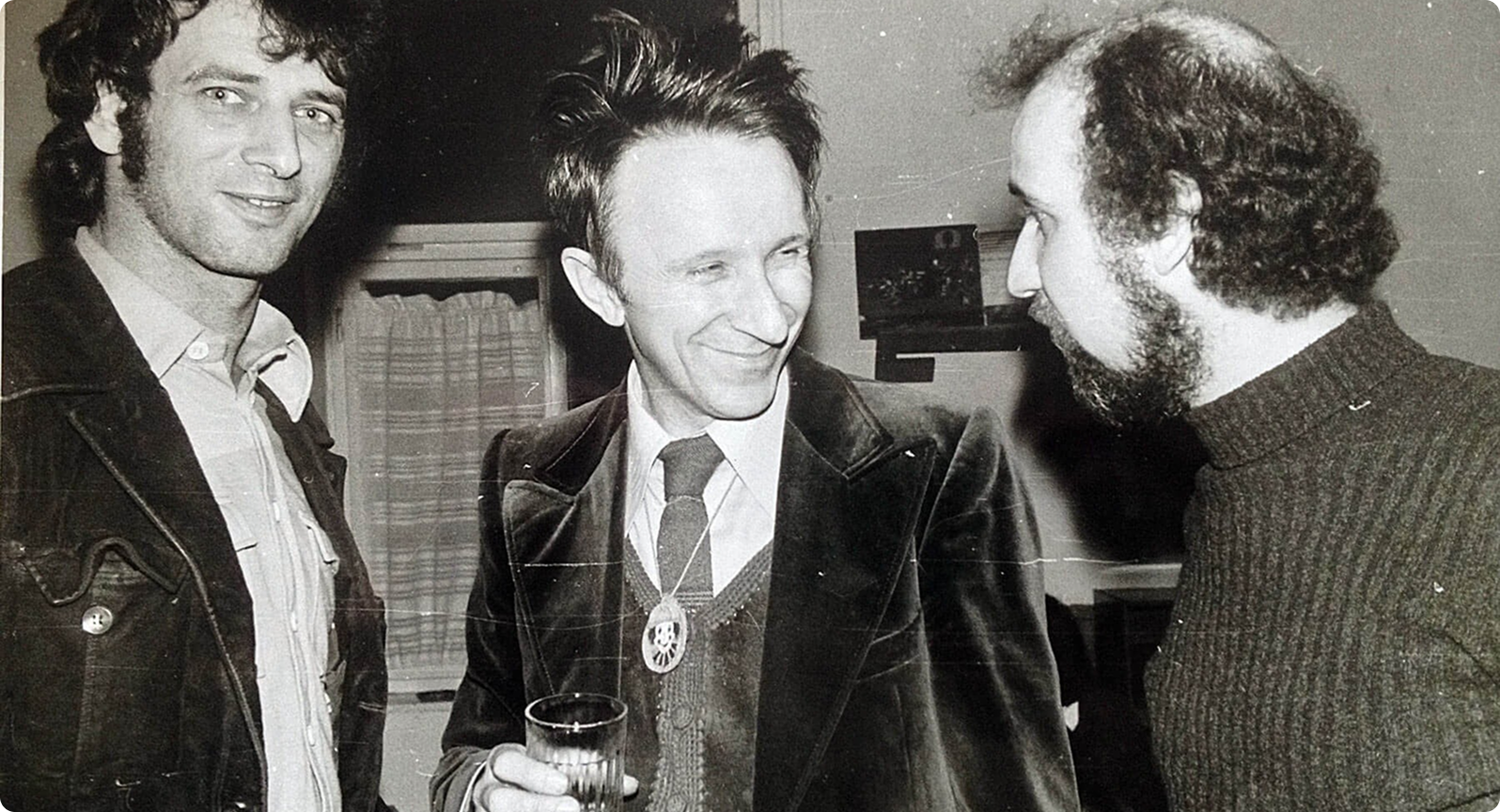
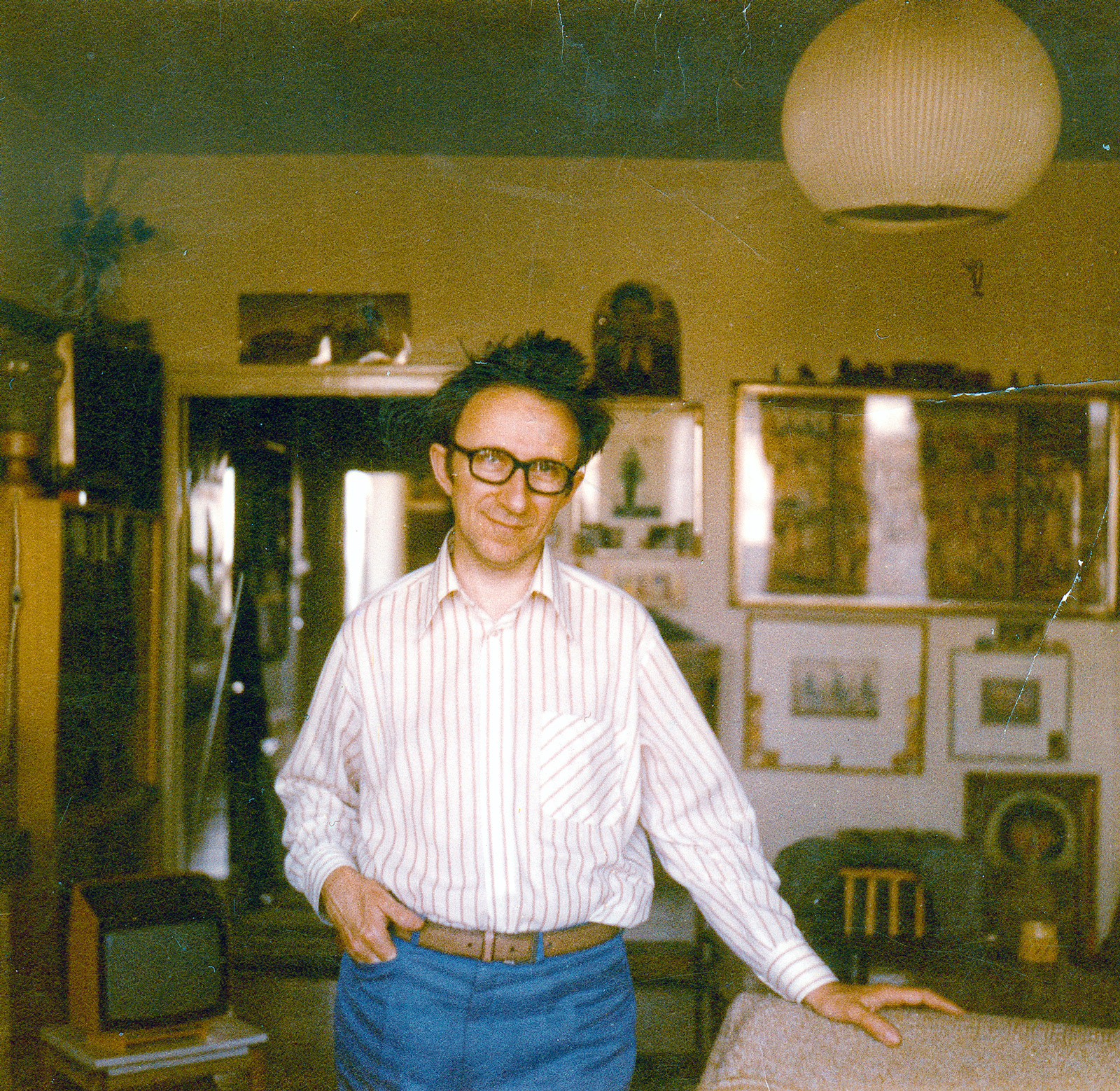
In addition, he participated in numerous group exhibitions in Hungary and abroad, and maintained an ongoing artistic collaboration with painter and engraver Sándor Gajzágó. Within Hungary, his works were also widely exhibited outside the capital, appearing in regional galleries, cultural institutions, private venues, as well as in cafés and cinemas. His exhibitions often incorporated personal objects-such as toys, minerals, and birds-reflecting his distinctive artistic universe.
Awards and Honours
1955 - Munkácsy Prize (3rd degree)
1958 - First Prize, Ex Libris Competition of the Studio of Young Artists
1966 - First Prize, Kraków International Graphic Biennial
1967 - Second Prize, Miskolc Graphic Biennial
1967 - Munkácsy Prize (2nd degree)
1968 - First Prize, Kraków International Graphic Biennial
1987 - Meritorious Artist
1993 - MSZOSZ Prize
1995 - Kossuth Prize
1996 - Elected member of the Széchenyi Academy of Literature and Arts; inaugural exhibition at the Museum of Applied Arts, Budapest
2009 - Príma Prize; Pro Urbe Budapest Award; Honorary Citizen of Turda
2014 - Awarded the title Artist of the Nation
In 2014, Arnold Gross opened his own gallery and café in Budapest under the name ARNOLDO.
He passed away on January 22, 2015, in Budapest. He is buried in Farkasrét Cemetery. His legacy is commemorated by memorial plaques at his former studio and residence, and by the naming of the main hall of the Ferenc Rákóczi II Transcarpathian Hungarian College in Beregszász in his honour.

NEWSLETTER
Subscribe to our newsletter!
By subscribing, I accept the general information on data processing.